Sonos system planning checklist for new homes
Published 2025-12-20
Moving into a new home is the best opportunity you’ll ever have to plan your Sonos system properly. A bit of forethought now can save money, avoid frustration, and prevent the familiar cycle of buying, returning, and re-buying speakers later.
Sonos works best when it’s treated as a whole-home system rather than a collection of individual speakers. New builds, renovations, and house moves give you a rare blank slate: power locations are flexible, Wi‑Fi can be designed sensibly, and room usage hasn’t yet solidified into habits.

This checklist focuses on the decisions that are hardest to undo later. You don’t need to lock yourself into specific models yet, the goal is to avoid structural mistakes that quietly limit your options.
1. Understand how each room will actually be used
Before thinking about products, list every room and decide whether audio there will be background, focused, or social.
- Background rooms (hallways, bathrooms, utility rooms) rarely benefit from expensive speakers.
- Focused rooms (offices, lounges, listening spaces) benefit from stereo separation and better placement.
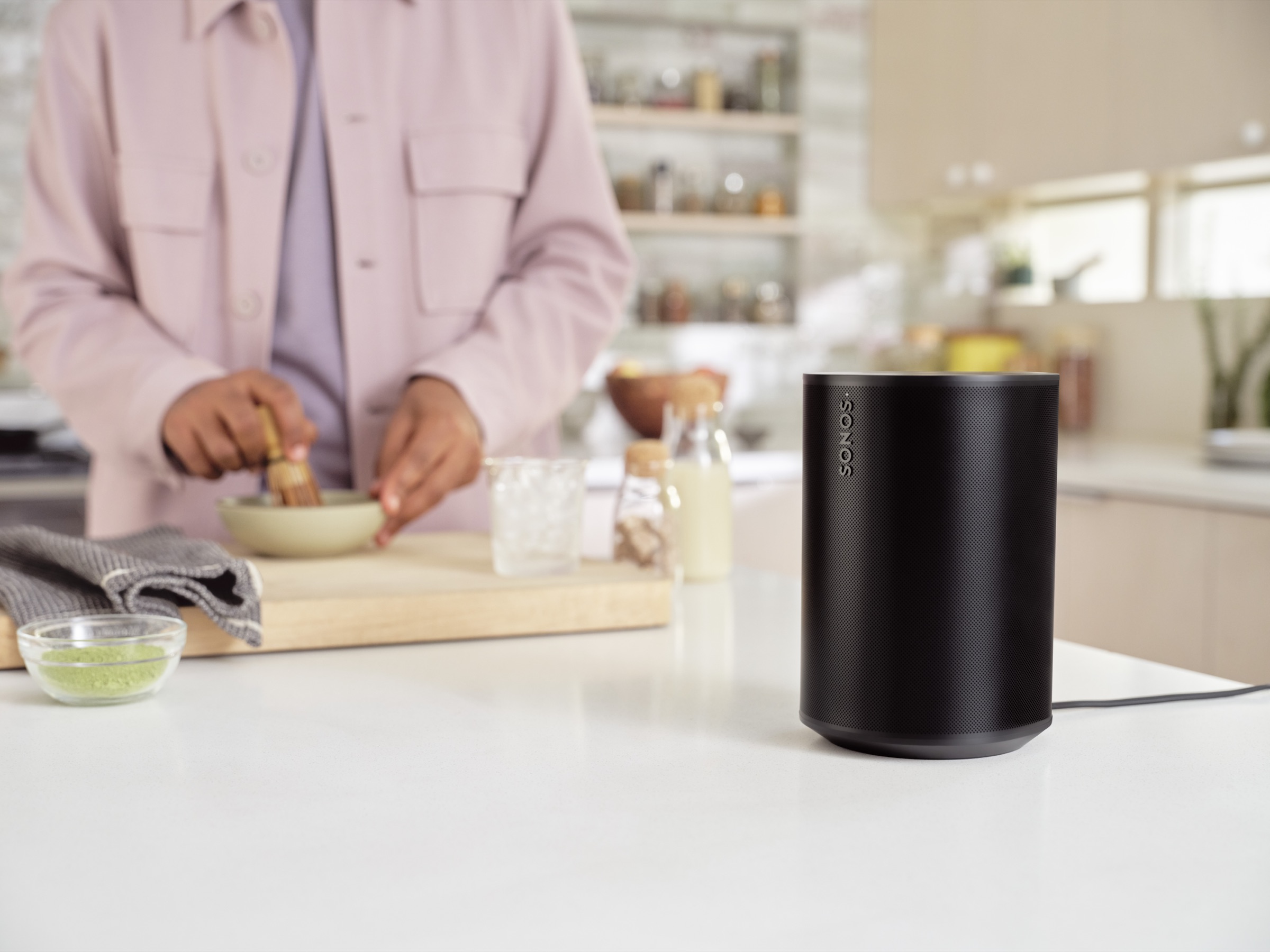
- Social spaces (kitchens, open‑plan living) need coverage and balance more than raw volume.
This single step prevents the most common mistake: over‑buying in small rooms and under‑speccing shared spaces.
2. Plan Wi‑Fi properly (this matters more than speakers)
Many “Sonos problems” are actually Wi‑Fi problems. New homes are often larger, more insulated, and more hostile to wireless signals than people expect.
- Ensure strong, consistent coverage in every room that will have a speaker.
- Consider mesh Wi‑Fi early rather than trying to patch weak spots later.
- Avoid placing speakers in known dead zones just because a plug socket happens to be there.
If Wi‑Fi struggles in a room now, it won’t magically improve once furniture is added.
3. Think about power and placement together
Sonos speakers are flexible, but they still need sensible power locations. New homes make it easier to avoid visible cables, extension leads, and awkward compromises.
- Plan sockets near shelves, sideboards, or wall‑mount positions.
- Consider whether a room might benefit from a stereo pair, that often dictates two power points.
- Don’t hide speakers in cupboards or alcoves “to keep things tidy”, sound quality will suffer.
4. Decide early which rooms need TV audio
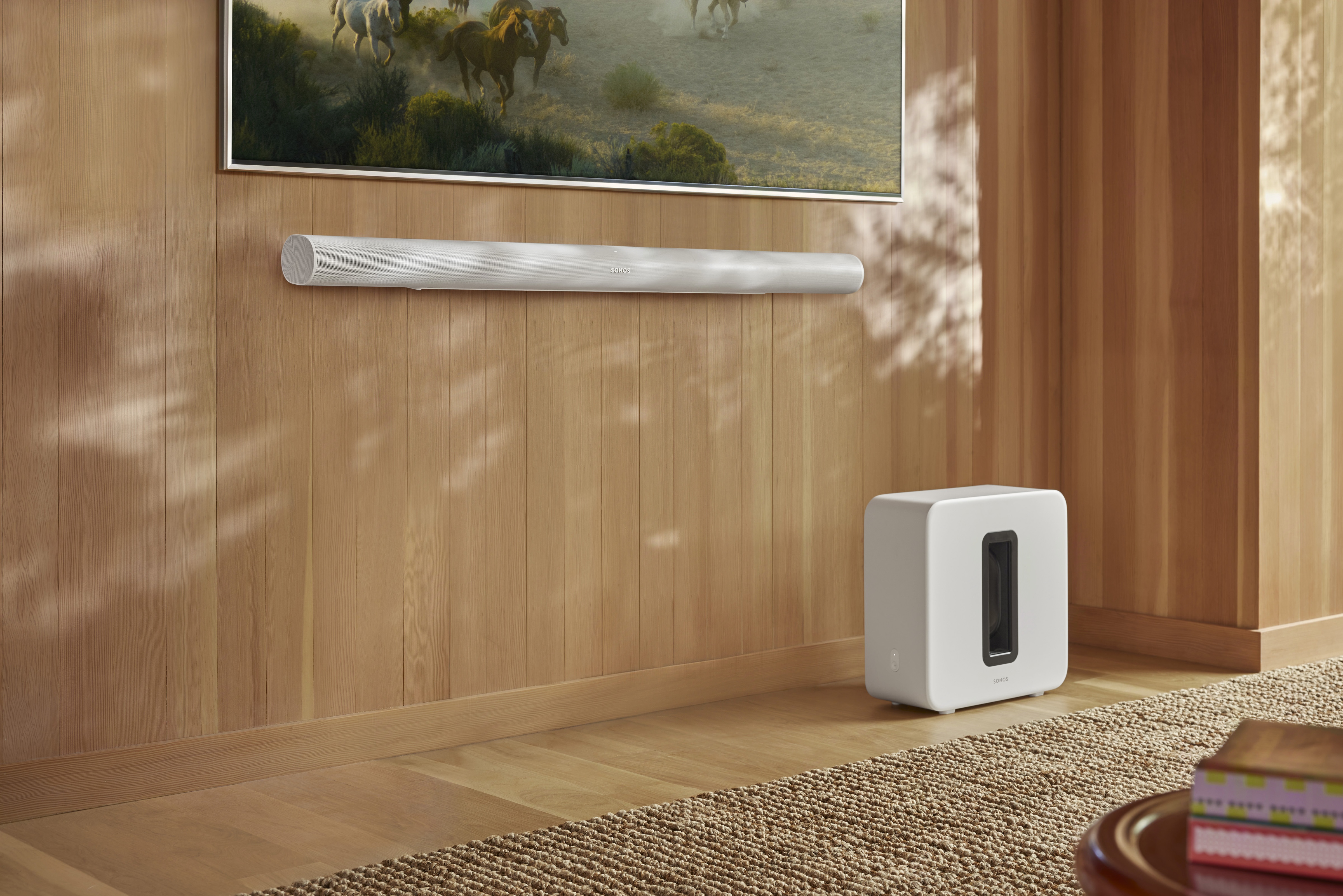
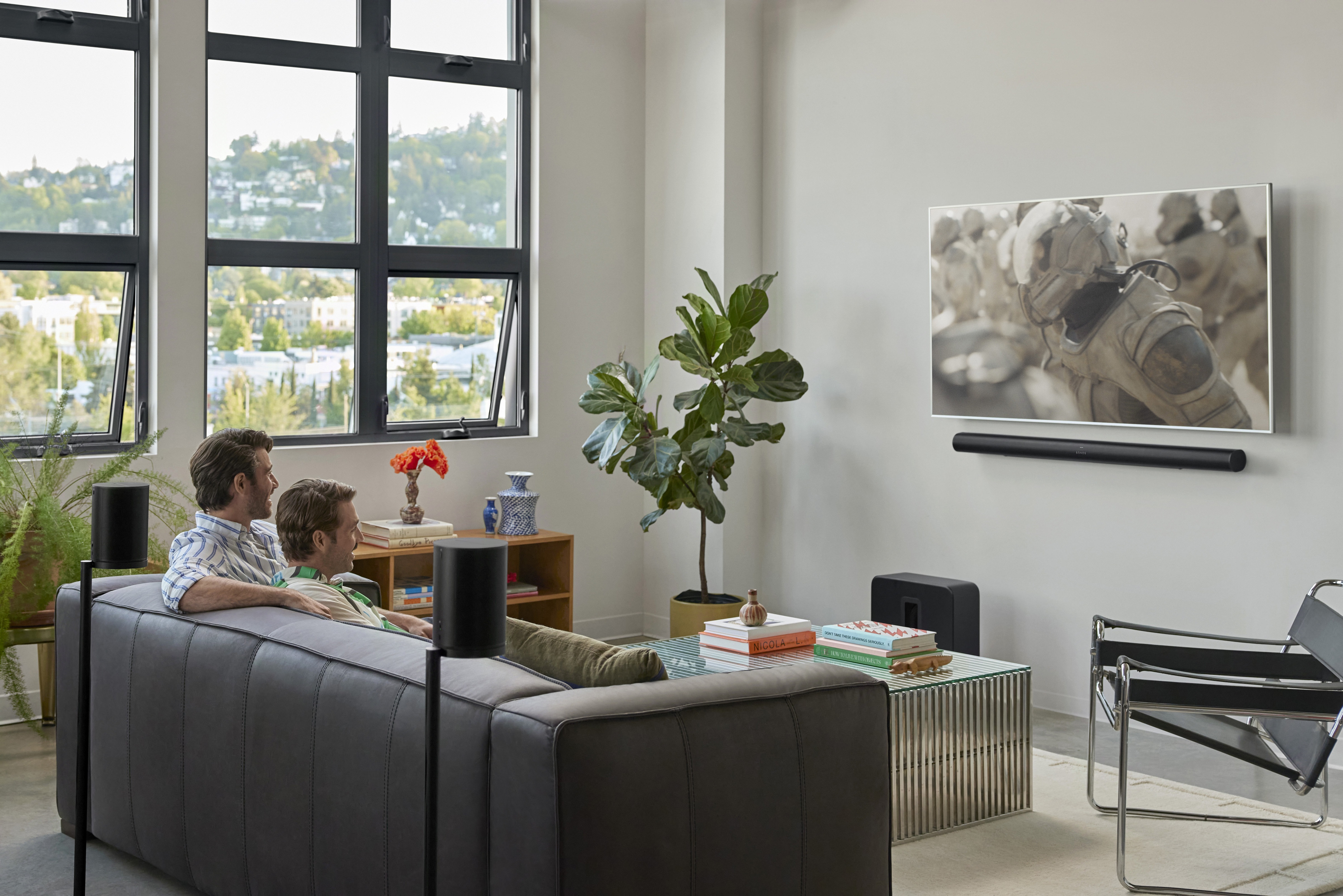
TV rooms fundamentally change Sonos planning. Soundbars anchor a system in a way standalone speakers never do.
- Identify which rooms will have a TV now, even if the TV itself isn’t bought yet.
- Allow wall space and power for a soundbar rather than improvising later.
- Think about whether surround sound is realistic, or whether simplicity matters more.
Retrofitting surround speakers after furniture and décor are set is far harder than planning for them upfront.
5. Be realistic about neighbours, noise, and time of day
New homes often come with closer neighbours or different noise expectations. Bigger isn’t always better if you’ll rarely be able to use it.
- Consider whether bass‑heavy setups make sense in flats or terraces.
- Late‑night listening may benefit more from clarity than sheer impact.
- Children, shift work, and routines all affect how audio is actually used.
6. Allow for future changes, not future over‑spend
A good Sonos system evolves. A bad one locks you into decisions you regret.
- Leave space for adding a second speaker later rather than buying oversized hardware now.
- Think about rooms that may change purpose over time.
- It’s fine to start simple, coherence matters more than completeness.
Planning a Sonos system properly isn’t about chasing the “best” speaker. It’s about matching the system to how your home really works.
If you want help turning these decisions into a clear, room‑by‑room recommendation, the Sonos Properly planner does exactly that, without upselling or unnecessary complexity.
Ready for a plan you can trust?
Build a tailored Sonos setup in minutes. No guesswork, no overspend.
Plan your Sonos system with confidence
Use the Sonos Properly planner to build a system that fits your rooms and the way you listen.
- A tailored system plan that fits your rooms and listening style.
- A value-led alternative that respects budget without cutting corners.
- An Ultimate option for maximum impact and future flexibility.