Sonos in Small Apartments - Designing a System for Tight Spaces
Published 2025-12-21
The goal in a small flat is great sound, not more speakers. Tight rooms build bass quickly, hard surfaces bounce treble, and neighbours are closer than you think. The win is controlled, even coverage at sensible volumes.
Before you buy anything, decide which listening goal actually matters most to you. Your choices below change depending on this.
- TV-first (clear dialogue, cinematic sound at low volume)
- Music-first (balanced sound while cooking or working)
- Whole-flat background audio (consistent vibe, not club levels)
- Occasional party mode (still neighbour-aware)
The right size Sonos speaker for small rooms
In compact spaces, speaker size matters more than people expect. Bigger is not automatically better.
Sonos One / Era 100: the sweet spot for most flats
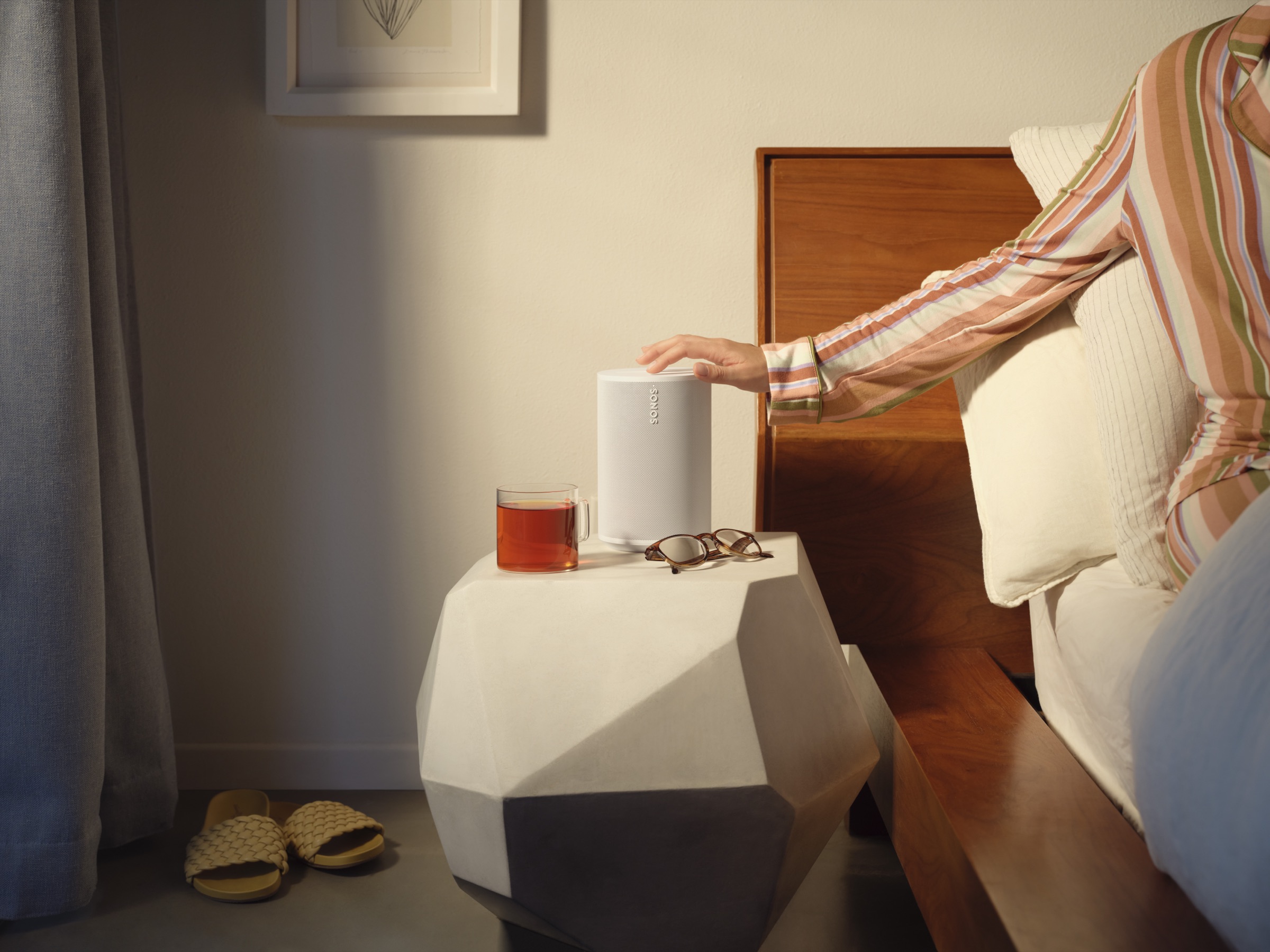
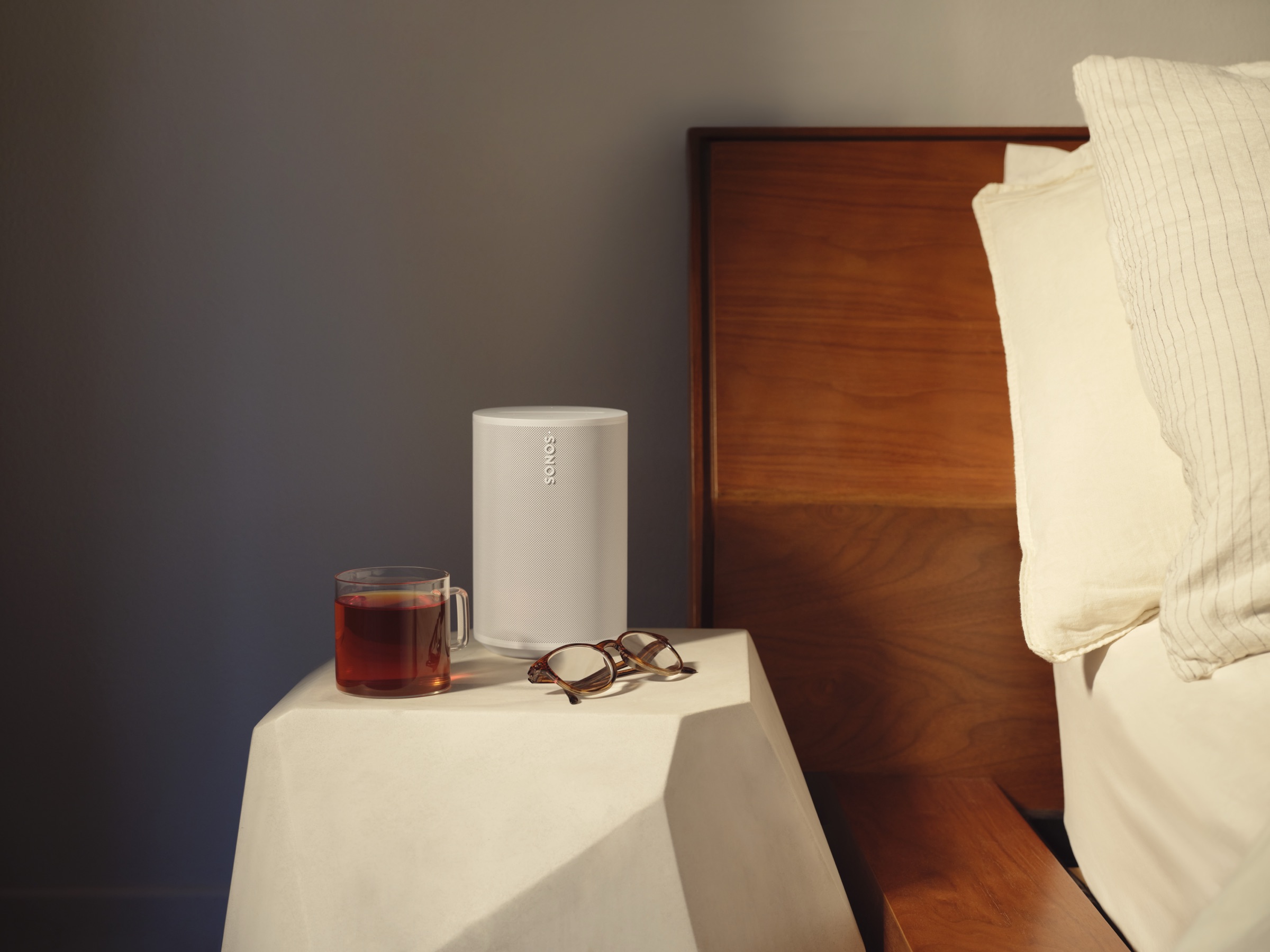
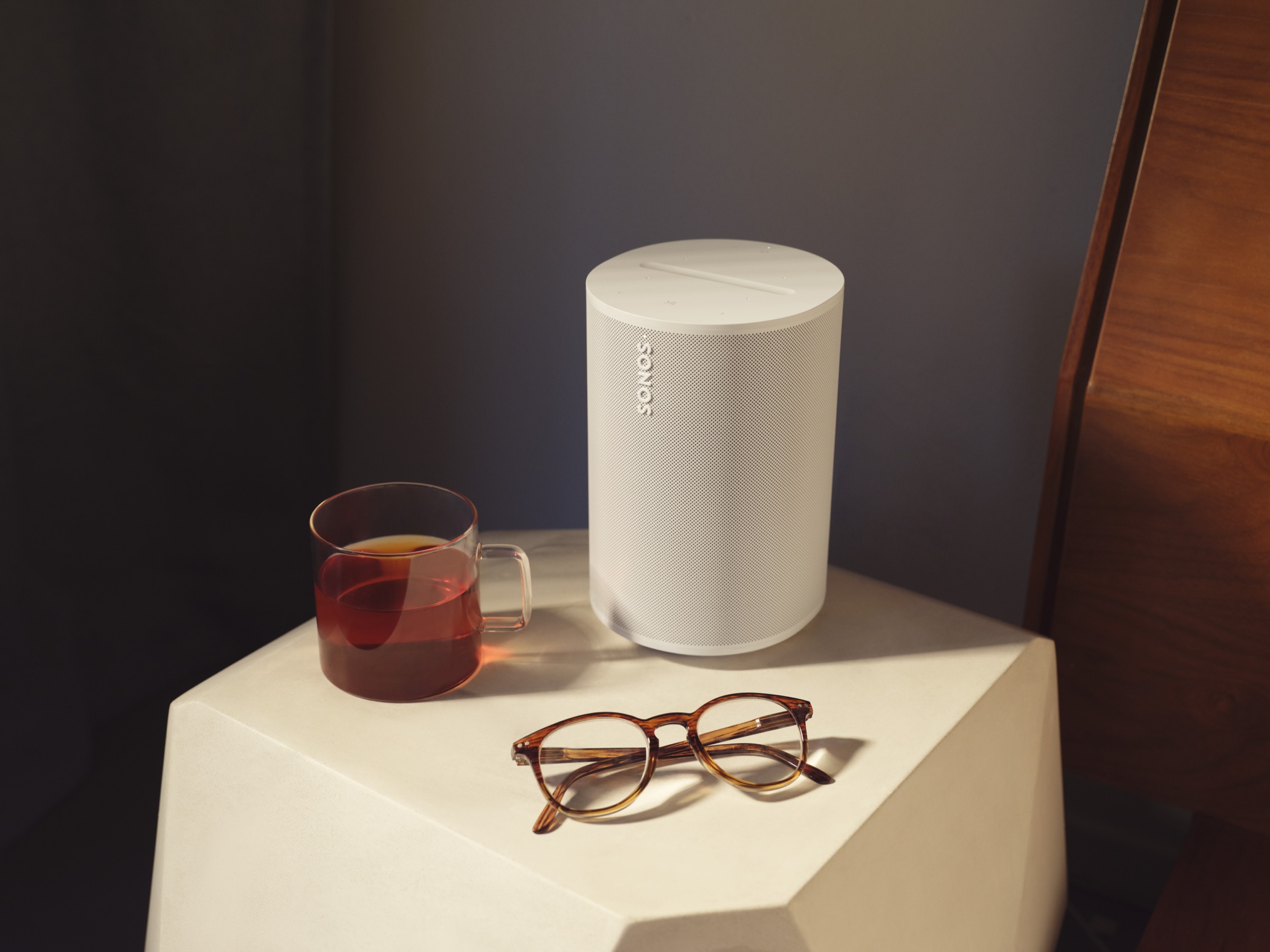
If you want music in a bedroom, office nook, or open-plan living space, one small speaker is usually enough. The upgrade path is simple: start with one, then add a second later for stereo.
- You want clean sound without overpowering the room.
- You listen at moderate volumes most of the time.
- You want a flexible, future-proof starting point.
Sonos Five: only if your flat is unusually large
A Five can sound incredible, but in a small apartment it can become bass-heavy and too much, especially near party walls. It is also physically large, which makes placement awkward in tight rooms.
- You have a large open-plan living area (rare for a flat).
- You care about higher-volume music playback without strain.
- You can place it properly (not jammed in a corner, not on a thin shelf).
Many people buy a Five when what they actually needed was two smaller speakers in stereo. That often sounds wider and more natural at low to mid volume.
Stereo pair vs single speaker in small spaces
A stereo pair is the biggest quality upgrade you can make without going bigger or louder. You get a wider soundstage, better clarity at lower volume, and more even coverage across the room.
If you listen casually, start with one speaker. If you care about music quality, plan for the pair.
Quick comparison
| Option | Best for | Apartment risk |
|---|---|---|
| One / Era 100 (single) | Background or casual music in tight rooms | Low |
| One / Era 100 (stereo pair) | Music-first setups at moderate volume | Low |
| Five (single) | Larger open-plan flats, higher volume | Medium to high |
Flat-friendly soundbar setups: better TV sound without annoying the neighbours
For TV in a flat, your enemy is not volume. It is spiky transients: explosions, bass hits, and sudden loudness jumps that travel through walls.
The smart flat default: Sonos Beam
If you want a soundbar that is great at dialogue and works well at low volume, the Beam is usually the safest choice.
- Better vocal clarity so you can listen quieter.
- A tighter, controlled sound profile.
- Useful night-time features.
Night Mode and Speech Enhancement are not gimmicks
- Night Mode reduces dynamic range (less boom and bang).
- Speech Enhancement pushes dialogue forward so you do not crank volume.
Your goal is clear at 25 percent volume, not impressive at 60 percent.
Soundbar snapshot
| Need | Recommended | Why it works |
|---|---|---|
| Apartment TV at low volume | Beam | Clear dialogue and night listening tools |
| Budget second-room TV | Ray | Simple setup, smaller output |
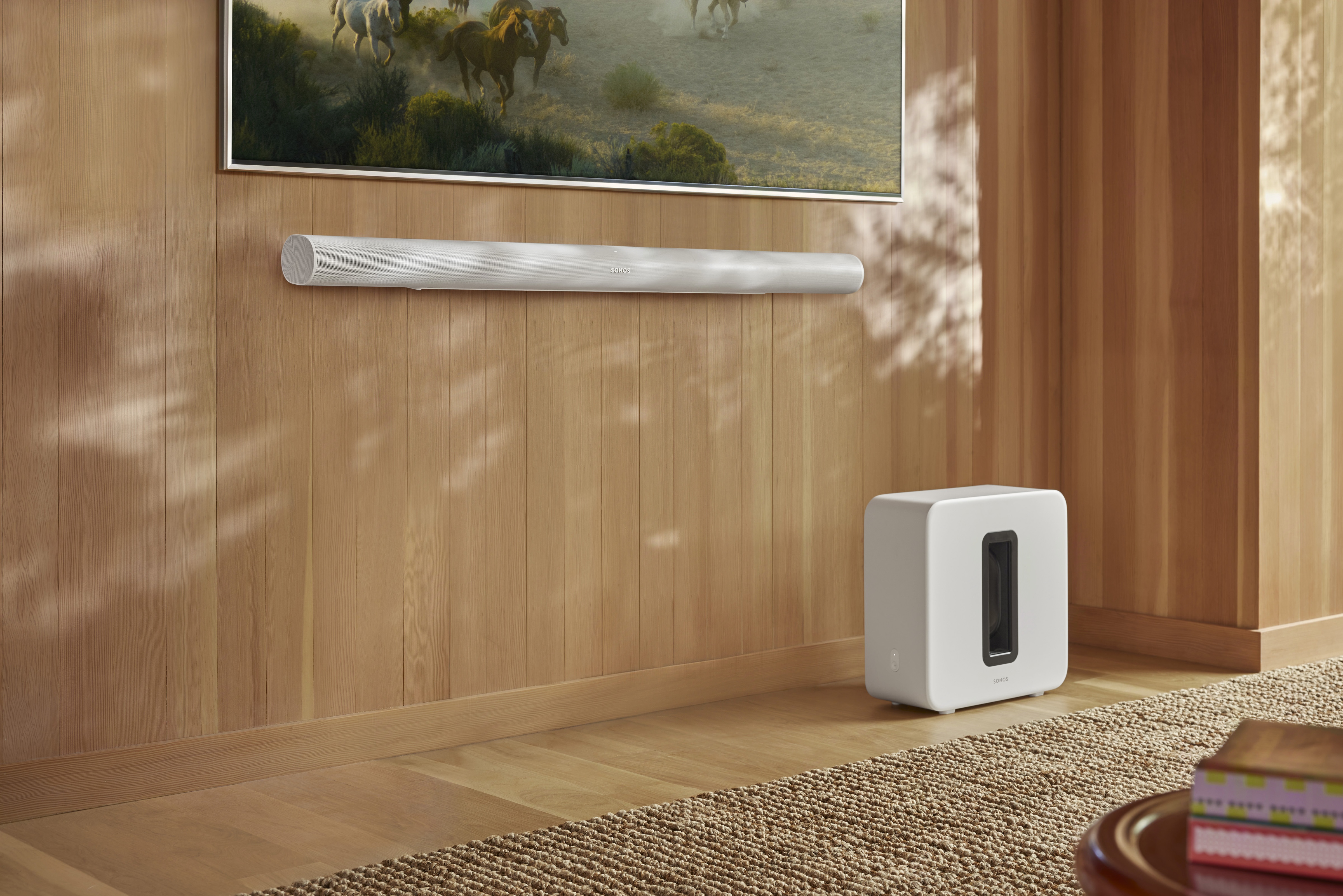
| Large room with eARC TV | Arc | Bigger stage, but easier to overdo in small flats |
Placement in small rooms: the difference between nice and annoying
Placement is where apartment Sonos setups live or die. In small spaces, your speakers are always close to a wall, and that changes everything.
Avoid corners if you value neighbour peace
- Keep the speaker 20 to 40 cm away from corners.
- Do not tuck it into a bookshelf like it is a decorative candle.
- Avoid placing it directly against a shared wall if possible.
If you must place near a wall, you can reduce bass in the app later. It is better not to create the problem in the first place.
Height and direction matter more than raw power
- Ear-height when seated (sideboard, shelf, stand).
- A stable surface (no wobbly side table).
- Slightly forward of the back wall rather than flush against it.
Use softer placement if your flat is echoey
If your apartment has wood floors, big windows, and minimal soft furnishings, it will sound bright and fatiguing.
- Rug in the main listening area.
- Curtains, even thin ones.
- Fabric sofa rather than leather (if you are furnishing anyway).
- Do not place the speaker directly in front of glass.
Stopping vibration and bass transmission
A big chunk of neighbour annoyance is not airborne sound. It is vibration through surfaces. If your speaker sits on a thin shelf, shared wall, radiator cover, or hollow cabinet, you have built a vibration amplifier.
- Put speakers on solid furniture (dense sideboard beats a floating shelf).
- Add isolation pads under speakers (simple, cheap, works).
- Avoid placing speakers on or against party walls.
- If you must place near a party wall, reduce bass and use Trueplay.
If you have ever had a neighbour complain when your volume did not even feel loud, this is usually why.
Wi-Fi in apartment buildings: the silent Sonos killer
Dense buildings are a Wi-Fi warzone. Everyone has a router, and many compete on the same channels.
- Speakers disappearing from the app.
- Grouping issues.
- Dropouts, especially in the evening.
- Delay when starting playback.
The boring fix that works: stabilise the network
- Put your router somewhere sensible, not in a cupboard or behind the TV.
- Use 5 GHz where possible for phones and laptops, but remember some devices still rely on 2.4 GHz.
- If your router supports it, separate SSIDs for 2.4 GHz and 5 GHz to reduce confusion.
- Avoid Wi-Fi extenders that create new network names and confuse devices.
Mesh Wi-Fi can be brilliant, but only if configured properly
- Place nodes with a strong connection between them.
- Do not create a daisy chain through too many nodes.
- Prefer wired backhaul where possible (even one wired node can help).
Your Sonos experience is only as good as your network. In a flat, that is not optional.
Trueplay tuning: your secret weapon for small rooms
Small rooms have strong reflections and bass build-up. Trueplay can tame both.
- Run Trueplay if the sound is still too bassy or too sharp.
- Then tweak EQ slightly. Do not be afraid to reduce bass by 1 to 3 notches.
- Chase clarity at low volume, not maximum impact.
For a full walkthrough, see the Trueplay tuning guide.
Landlord-friendly setup tips (no drilling, no regret)
You can make a Sonos setup feel intentional without touching the walls.
- Speaker stands give ideal height without wall mounts.
- Cable trunking (paintable) keeps it neat and removable.
- Command strips and hooks work well for lightweight cable management.
A simple rule: if you cannot undo it in 10 minutes, think twice.
Three proven Sonos setups that work brilliantly in flats
1) One-room flat or studio (music-first, minimal)
- 1x Sonos One or Era 100 in the main space.
- Optional upgrade: add a second later for stereo.
Why it works: simple, controlled, excellent at moderate volume.
2) Typical flat with lounge + bedroom (balanced)
- Beam for the TV room (dialogue at low volume).
- 1x One or Era 100 in the bedroom (or a second in the kitchen nook if you cook a lot).
Why it works: TV benefits most from a soundbar. Bedrooms do not need big hardware.
3) Proper TV sound, still neighbour-safe
- Beam + 2x smaller speakers as surrounds, placed carefully.
- Night Mode on by default for evening viewing.
- Bass reduced slightly in EQ if needed.
Why it works: you get immersion without needing higher volume.
Common apartment mistakes (avoid in 30 seconds)
- Buying a big speaker, then parking it in a corner.
- Placing speakers on flimsy shelves (vibration city).
- Trying to fill every room immediately.
- Assuming Wi-Fi will just work in dense buildings.
- Turning up bass because it sounds fun, then wondering why complaints happen.
- Ignoring Night Mode and Speech Enhancement and compensating with volume.
If you are trying to keep costs down, start with one speaker in your main room and expand later.
Quick checklist before you buy
- Which room actually needs the best sound? (Usually the lounge or TV room.)
- Where are the party walls? Can you avoid placing speakers against them?
- Do you listen late at night? If yes, prioritise a soundbar with Night Mode.
- Is your Wi-Fi stable in every room you want sound? Test it.
- Could you start smaller and expand later? You almost always can.
Ready for a plan you can trust?
Build a tailored Sonos setup in minutes. No guesswork, no overspend.
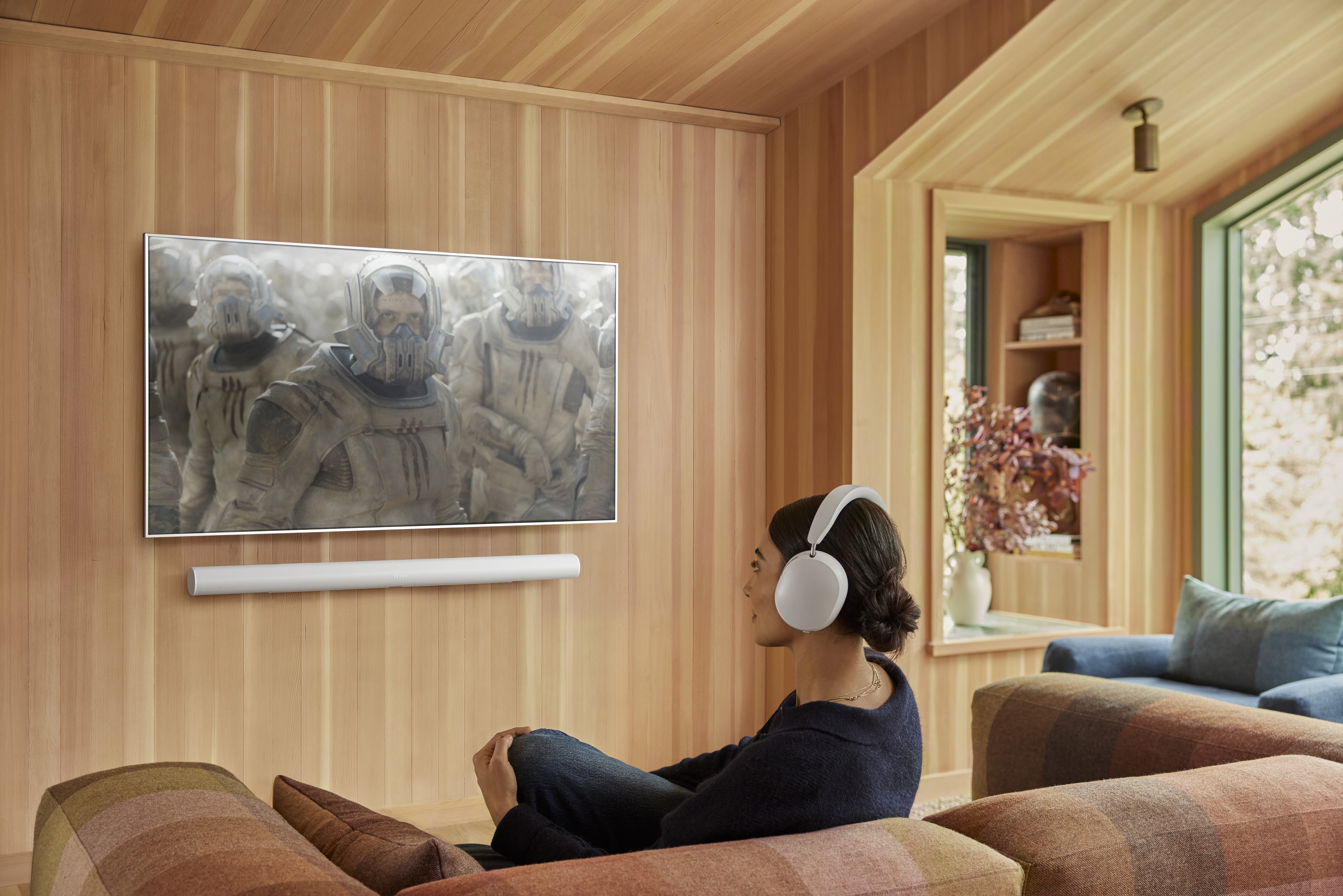
Plan your Sonos system with confidence
Use the Sonos Properly planner to build a system that fits your rooms and the way you listen.
- A tailored system plan that fits your rooms and listening style.
- A value-led alternative that respects budget without cutting corners.
- An Ultimate option for maximum impact and future flexibility.