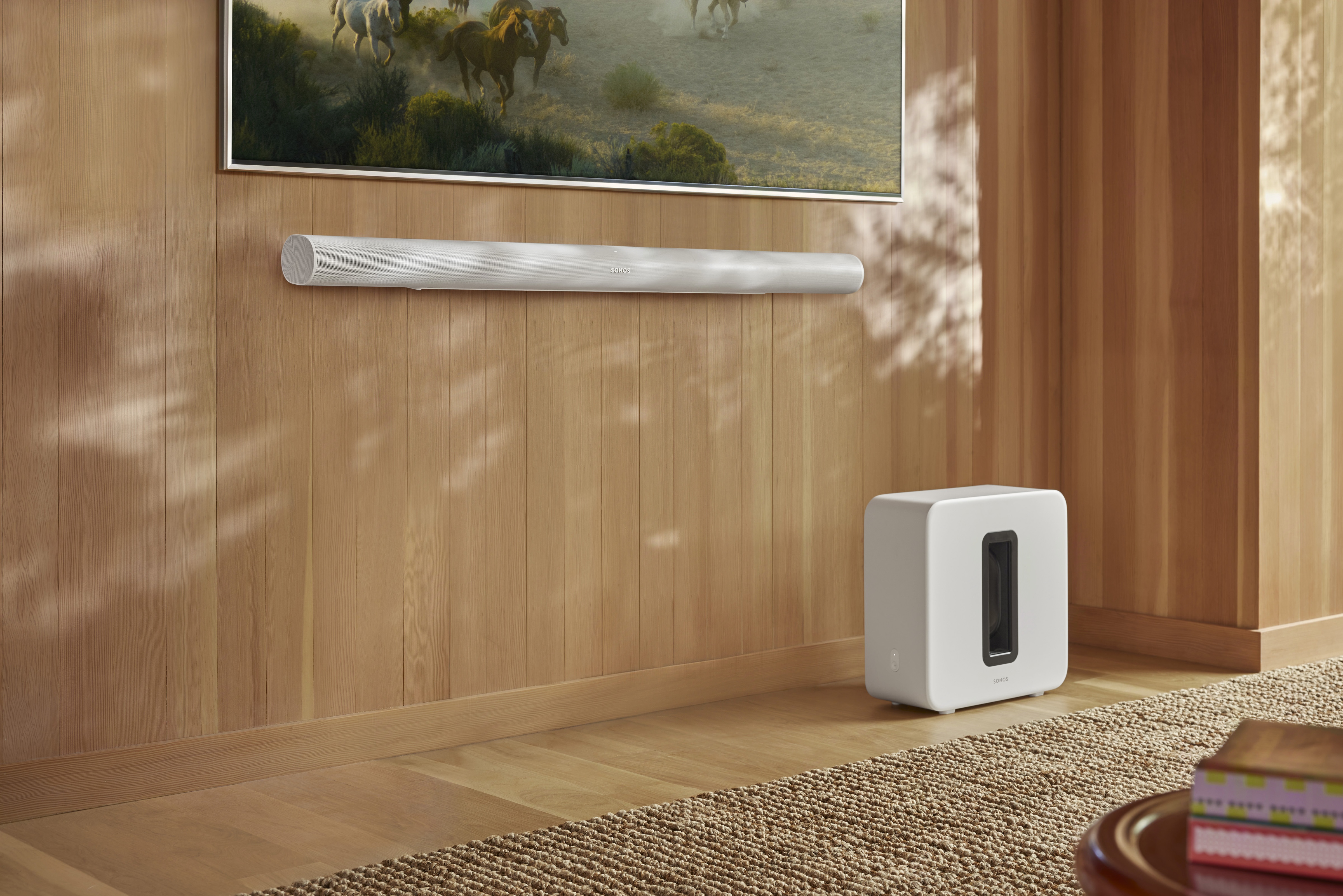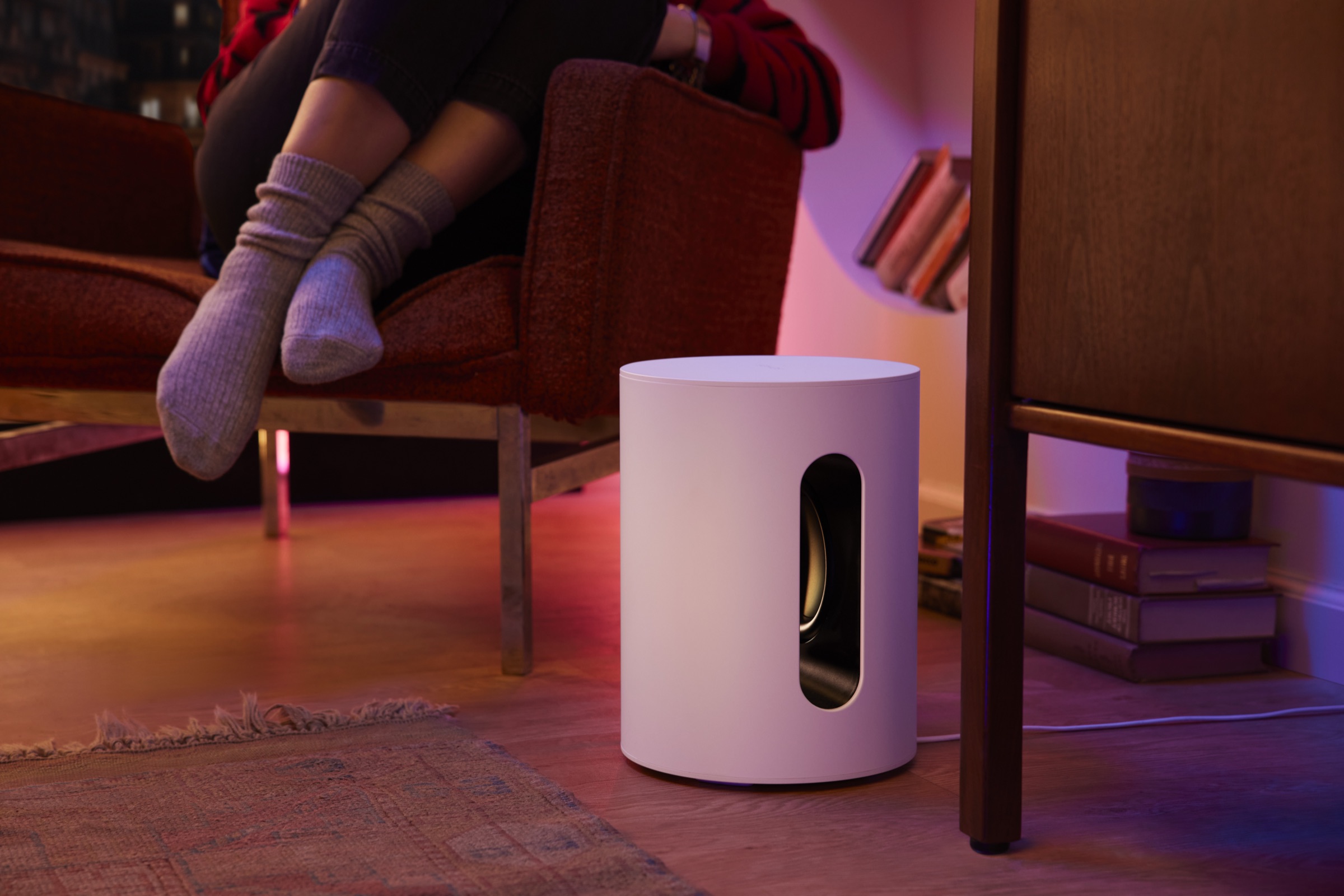
Sub Mini vs Sub (Gen 3 / Gen 4) - Which One Fits Your Room?
Published 2026-02-08
Bass physics, not hype. Sub Mini is the correct choice for most homes, and the full Sub only earns its keep in bigger spaces or louder systems. This guide shows how to judge room size, seating distance, and daily listening habits so the bass feels controlled instead of overwhelming.
First: what a Sub actually does
A Sub is a workload shift. It handles low frequencies so your soundbar or stereo speakers can focus on midrange detail and dialogue. The system sounds cleaner at the same volume because the main speakers are not trying to do everything at once.
That is why the best Sub is the one that fits the room. The goal is controlled bass that supports the mix, not volume for its own sake.
Bass physics 101 (without the nonsense)
Low frequencies fill rooms in a way higher frequencies do not. They spread further, build up in corners, and pass through walls far more easily. That is why a Sub can feel huge in a small space and barely noticeable in a large open-plan room.
More output is not always more enjoyment. In compact rooms, extra bass energy quickly turns to boom and fatigue.
Room volume thresholds
Room volume matters more than floor area. Ceiling height and open-plan layouts change how bass spreads. Use this as a practical guide, then adjust for your room shape and listening distance.
| Room type | Best fit |
|---|---|
| Small rooms / flats | Sub Mini almost always sufficient |
| Medium rooms | Sub Mini still strong; full Sub optional |
| Large open-plan rooms | Full Sub makes sense |
Listening distance (the overlooked factor)
Most sofas sit fairly close to the TV. At those distances, Sub Mini delivers tight bass with plenty of impact, and the extra output of a full Sub is hard to notice. If you sit several metres back in a larger room, the full Sub keeps its authority and feels more even across the space.
Bass control vs bass output
Sub Mini strengths
Sub Mini is easier to integrate in real rooms. It tends to sound tight, sits happily near a front wall, and is less likely to excite every corner of the room. That makes it calmer in flats and terraces where bass bleed is a real concern.
Full Sub strengths
The full Sub brings more headroom and deeper extension. It makes sense when you have space to breathe and want a bigger sense of scale. In large rooms, it spreads bass more evenly and stays composed at higher volumes.
Placement and tuning make or break it
Sub performance changes dramatically with placement. Start near the front wall, avoid jamming it into a corner, and move it 30 to 60 cm if bass feels bloated. Run Trueplay after any change, then nudge the bass level by one or two notches if needed.
A well-placed Sub Mini often outperforms a full Sub in a poor spot. Placement is the hidden upgrade.
Flats vs houses (be honest)
Flats and terraces suit Sub Mini because you can enjoy bass without constant volume policing. Use Night Mode for late viewing, keep the Sub away from shared walls, and you will get the benefits without the guilt.
Detached homes can justify a full Sub, but only when the room is genuinely large or you listen louder. If your lounge is modest, Sub Mini still fits better.
Music vs TV use
For TV and film, the Sub mostly adds weight and cleans up dialogue by taking load off the soundbar. For music, it changes the character of the system. Sub Mini often feels more natural in small rooms, while the full Sub pays off in larger spaces where you want deeper extension at higher volumes.
Dual Subs: context matters
Two Subs smooth bass across seating positions rather than making it louder. This only makes sense in large rooms where a single Sub leaves some seats feeling thin and others boomy.
Planner tie-in (this shouldn’t be guessed)
Use the Sonos Planner to judge room size, layout, and listening distance, then pick the Sub that matches reality.
Real-world example systems
Most homes
Beam or Arc + Sub Mini + optional surrounds.
Large open-plan space
Arc + full Sub + surrounds.
Flat with shared walls
Beam + Sub Mini (bass reduced slightly).
Final verdict
Sub Mini fits real homes far more often than people expect. The full Sub earns its place in large rooms or higher-volume systems, but it is wasted in tight spaces. Match the Sub to the room and the way you actually listen, and the upgrade feels clean rather than overpowering.
Ready for a plan you can trust?
Build a tailored Sonos setup in minutes. No guesswork, no overspend.
Plan your Sonos system with confidence
Use the Sonos Properly planner to build a system that fits your rooms and the way you listen.
- A tailored system plan that fits your rooms and listening style.
- A value-led alternative that respects budget without cutting corners.
- An Ultimate option for maximum impact and future flexibility.